
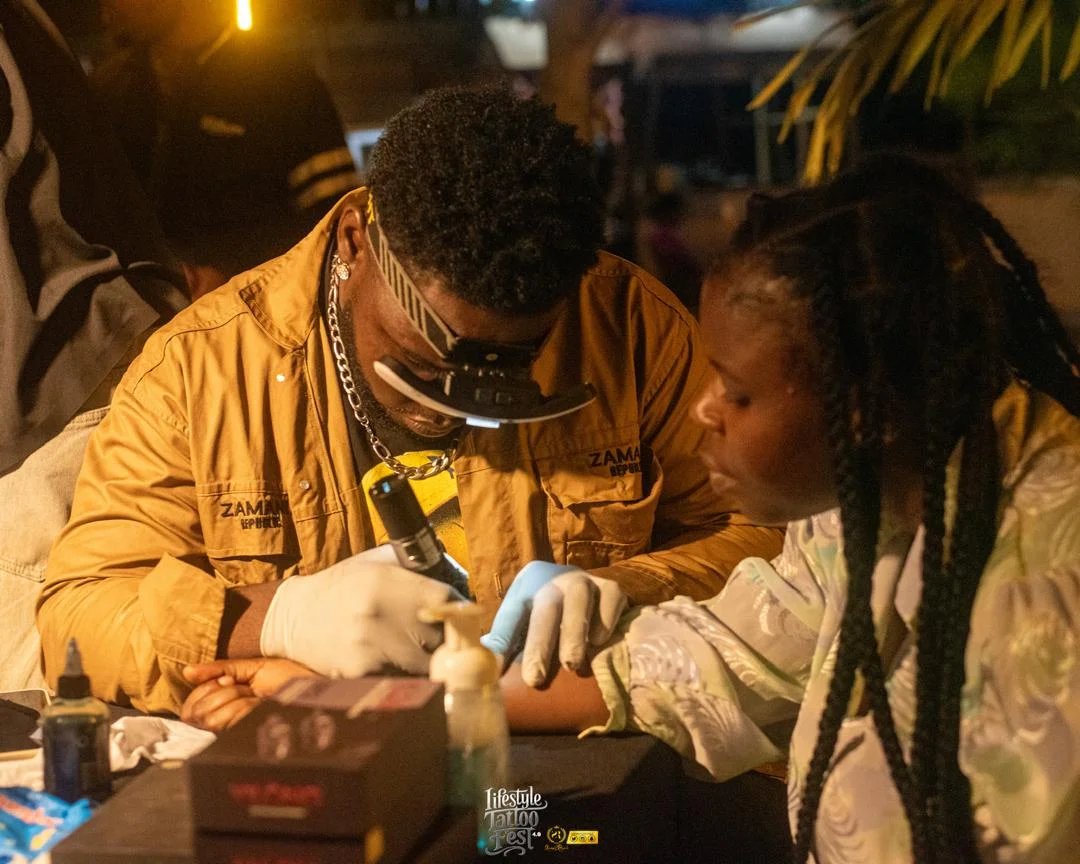
Tattoos (tatuu, or tatto inu in Yoruba) have moved from cultural marks of identity to a popular form of self-expression across Nigeria. Prices vary widely, and so does hygiene. This guide gives you a studio price list, the safety checks that matter, and everything to prepare before your session.
Tattoo Prices in Nigeria (The Studio Price List)
The prices below come from the published price list of Zedd Inks Tattoo Studio, which operates in Akure and Benin City. Studio prices change with design, size, and placement, so your artist price maybe different from the table below.
| Tattoo Type or Size | Price (₦) |
|---|---|
| 3 x 3 inch | 35,000 |
| Palm tattoo | 50,000 |
| Medium | 80,000 |
| Large | 120,000 |
| Half chest | 165,000 |
| Half thigh | 170,000 |
| Palm size portrait | 200,000 |
| Waist (wrap around) | 200,000 |
| Rib tattoo | 250,000 |
| Half sleeve | 260,000 |
| Full chest | 300,000 |
| Full thigh | 400,000 |
| Full sleeve | 550,000 |
| Service | Extra cost or condition |
|---|---|
| Home service | 50% added to the regular price |
| Cover up (stretch marks, old tattoos, scars) | 50% added to the regular price |
| Interstate travel | You pay the artist’s travel and hotel costs |
| Booking deposit | 50% upfront. No deposit, no appointment |
Other services at this studio include custom designs, piercing, and tattoo accessories. You can book on WhatsApp at 08123771614.
What drives the final price
- Size and detail: Fine line work, dotwork, and heavy shading take more hours, so they cost more than a simple script of the same size.
- Placement: Ribs, waist wraps, and large areas such as the thigh or chest cost more because they take longer and are harder to work on.
- Cover ups: Hiding an old tattoo, scar, or stretch marks takes extra planning and layering, which is why the studio adds 50%.
- Where the work happens: A home visit costs more because the artist brings the full setup to you.
Good tattoos are not cheap, and haggling usually leads to rushed work or cut corners on hygiene. If a price looks far below the list above, ask yourself what is being skipped.
Before You Book: 5 Things to Get Right

1. Design and placement
- Come with a clear reference image. “Do something cool” gives your artist nothing to work with, and style, size, and placement all change both the price and the pain.
- Go bigger if you want detail. A small, highly detailed tattoo tends to blur within a couple of years.
- Placement decides how long your ink stays sharp. Hands, fingers, feet, and elbows fade fastest.
- Think twice about the ribs, back of the knees, inner elbows, and groin. These areas hurt more and can heal slowly.
2. Health check
- Avoid alcohol, recreational drugs, and heavy painkillers for 24 hours before your session. They thin your blood and interfere with healing.
- Eat well, drink plenty of water, and sleep properly. Never come on an empty stomach.
- Skip the session if you have sunburn or fresh cuts on the area, and do not shave over broken skin.
- If you are sick, diabetic, or on blood thinners, tell your artist before you book.
3. Budget and time
- Set aside enough money for the tattoo and for aftercare products.
- Expect to pay a deposit. It secures your slot, and most professional artists will not hold a date without one.
- Detailed work such as stipple or dotwork can take 3 to 5 hours for a single piece. Be ready to sit that long, and bring water and a snack.
4. Skin prep
- If you do not usually moisturise, start 3 to 4 days before your appointment so your skin is in good condition.
- On the day itself, arrive with clean skin and no lotion on the area.
- Wear loose clothing afterwards. Tight clothes put pressure on the fresh ink.
- Choose black or dark clothes for the first few days. The ointment and the fluid that seeps from a healing tattoo can stain light fabric.
5. Pain and healing
- Pain is part of the process. Avoid numbing cream unless your artist approves it, because it can change the texture of your skin and affect the result.
- Do not gym, swim, or stay long in the sun for 10 to 14 days. All three can damage a healing tattoo, so plan your schedule around it.
- Healing is about half your job. Follow your artist’s aftercare instructions, not random TikTok advice.
If you are not fully sure about the design, do not book yet. A tattoo is permanent, and a consultation is free.
5 Safety Checks Before Anyone Touches You With a Needle
Your skin is your body’s main barrier, and a tattoo needle breaks it thousands of times per session. Check these before you sit down.
- Watch the needle setup. The artist should open a brand-new, sealed needle cartridge in front of you. Never accept a pre-opened needle.
- Confirm single-use items. Ink caps, razors, gloves, and barrier plastics must be thrown away after your session, and the artist should wear fresh gloves throughout.
- Look at the space. A safe studio looks and smells clean, with wiped surfaces and clean trays. If it feels like a messy back room, leave.
- Know the infection risk. Unhygienic parlors that reuse tools can spread bloodborne infections including Hepatitis B, Hepatitis C, and HIV, as well as serious skin infections.
- Ask about their process. A professional artist will happily explain how they sterilise equipment and will not be offended when you ask.
Tattoo Aftercare: The First 7 to 10 Days
A new tattoo is an open wound. How you treat it decides how sharp the ink stays and whether it gets infected. Use one of these:
- Healing ointment: A thin layer of Aquaphor or a professional tattoo balm.
- Fragrance-free lotion: A mild, alcohol-free moisturiser once the first layer of healing has started, to stop the skin from cracking.
- Soothing cream: A thin layer of Bepanthen to calm irritation.
Do not use raw petroleum jelly such as Vaseline on a fresh tattoo, because it traps heat and bacteria. Keep applications thin, since a thick layer smothers the skin.
Tattoos, Work, and Society in Nigeria
Getting a tattoo is legal in Nigeria, but a few limits apply in Nigeria.
- Security services: Visible tattoos can disqualify you from careers in the Nigerian Military, Police, and some paramilitary agencies.
- Corporate jobs: If you work in a client-facing role, place your first tattoo somewhere clothing covers, such as the upper arm, shoulder, or chest.
- Social attitudes: Many workplaces, families, and religious communities still view visible tattoos negatively. Decide how you will handle that before you commit.
Editorial Policy: HealthSoothe is dedicated to providing evidence-based, actionable wellness content. Every piece of content or review on our platform is cross-referenced with peer-reviewed medical journals and verified by certified healthcare professionals before publication.