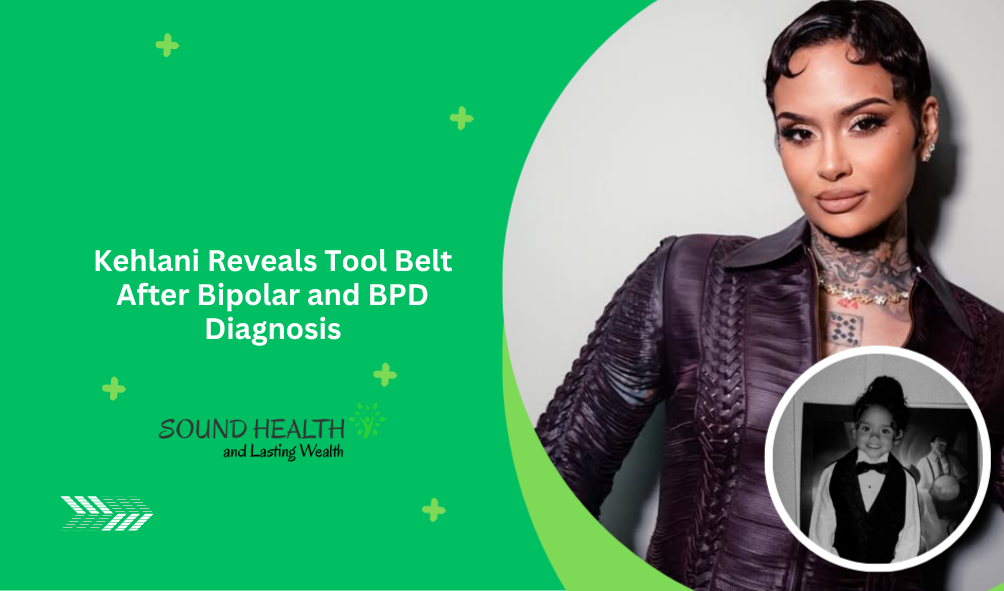
Kehlani, the Grammy-nominated artist behind hits like “Folded,” has always woven vulnerability into her music. Last year, she shared a pivotal update: diagnoses of borderline personality disorder (BPD) and bipolar disorder. This revelation sparked conversations on celebrity mental health struggles. Kehlani shared how her mental health diagnoses led to medication, therapy, and building awareness of her symptoms. She described it as gaining a “tool belt of awareness,” a metaphor for the practical skills she’s developing to navigate her unique mind. “I’m starting to learn what kind of life I have to lead as a person whose mind is different,” she told fans during a recent interview.
Her story resonates because it mirrors the reality for millions. According to the National Alliance on Mental Illness (NAMI), bipolar disorder affects about 2.8% of U.S. adults, while BPD impacts 1.6%. Kehlani’s openness highlights how early intervention through therapy and meds can transform chaos into clarity. This isn’t just celebrity gossip; it’s a blueprint for anyone facing similar battles.

How Kehlani’s Bipolar and BPD Diagnoses Changed Everything Overnight
When Kehlani announced her diagnoses in 2025, fans rallied with support. The “Folded” singer explained that years of mood swings, intense emotions, and relational turbulence finally had names. Bipolar disorder brings manic highs and depressive lows; BPD often involves fear of abandonment and unstable self-image. For her, these weren’t abstract labels but daily realities that disrupted creativity and relationships.
She pivoted quickly. Medication stabilized her cycles, while therapy unpacked triggers. This shift echoes what experts recommend: a multimodal approach. A 2023 study at The University of Oxford found that combining meds with cognitive behavioral therapy (CBT) reduces bipolar relapse by 40%. Kehlani’s “tool belt” includes recognizing early warning signs, like racing thoughts before a manic episode. One anecdote she shared? Journaling manic highs to spot patterns, turning hindsight into foresight.
What Is Kehlani’s ‘Tool Belt of Awareness’ and Why Does It Matter?
Picture a carpenter’s tool belt: hammers for nails, saws for cuts. Kehlani’s version equips her for mental ebbs and flows. She builds it through symptom tracking, boundary-setting, and self-compassion practices. “It’s not about curing my brain,” she said. “It’s about coexisting with it.”
This toolkit proves vital because unmanaged symptoms can derail lives. NAMI reports 1 in 5 adults with bipolar face suicide attempts; awareness cuts that risk. Kehlani credits therapy for teaching her to pause during emotional storms, much like an athlete reading a game’s momentum. Her approach demystifies management, showing it’s active work, not passive waiting.
Kehlani’s Real-Life Strategies: Medication, Therapy, and Symptom Mastery
Kehlani detailed her routine without sugarcoating. Mood stabilizers even out bipolar swings; BPD-focused dialectical behavior therapy (DBT) builds emotional regulation. She pairs this with lifestyle tweaks: consistent sleep, exercise, and a support network.
-
Daily Check-Ins: Logs moods via apps to catch shifts early, preventing full episodes.
-
Therapy Wins: DBT skills like mindfulness helped her during a 2025 tour meltdown, where she chose rest over performance.
-
Med Adjustments: Fine-tuned prescriptions reduced side effects, boosting her studio output.
These steps align with American Psychiatric Association guidelines, where 70% of patients see improvement with integrated care. Her progress? New music that feels “grounded,” she says.
Bipolar Disorder and BPD Stats: How Common Are Kehlani’s Challenges?
Numbers ground Kehlani’s story in broader context. The National Institute of Mental Health notes bipolar I affects 1% globally, with women twice as likely to seek diagnosis. BPD hits 75% of women in clinical samples. Co-occurrence, like hers, amplifies risks but responds well to tailored treatment.
A 2024 WHO report estimates 280 million bipolar cases worldwide, underscoring why stars like Kehlani speaking out matters. Her journey shows diagnosis as a starting line, not finish.
Kehlani’s Journey: From Diagnosis Shock to Empowered Living
Reflecting now, Kehlani embraces her “different” mind as a creative edge. That 2025 announcement led to sold-out shows and deeper fan bonds. She avoids toxic positivity, admitting bad days persist. Yet, her tool belt grows: meditation apps for BPD impulsivity, sober curiosity for stability.
This evolution inspires. As she puts it, awareness turns “survival mode” into strategy. Fans echo this in comments: one wrote, “Your honesty saved me from hiding my own bipolar.”
Also Read | Mikayla Matthews Breaks Down Over Chronic Illness CIRS
Soundhealthandlastingwealth.com offer the most up-to-date information from top experts, new research, and health agencies, but our content is not meant to be a substitute for professional guidance. When it comes to the medication you’re taking or any other health questions you have, always consult your healthcare provider directly.