
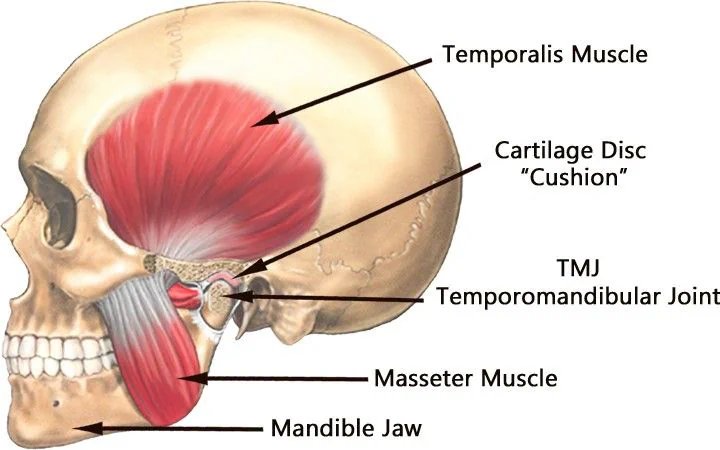
The temporomandibular joint (TMJ) is a small joint located in front of the ear where the skull and lower jaw meet. It permits the lower jaw (mandible) to move and function.
The temporomandibular joint disorders are not uncommon and have a variety of symptoms.
Symptoms of Temporomandibular Joint (TMJ) disorder
- Patients may complain of earaches,
- headaches and limited ability to open their mouth.
- They may also complain of clicking or grating sounds in the joint and feel pain when opening and closing their mouth. What must be determined, of course, is the cause.
Causes of Temporomandibular Joint (TMJ) Disorders
Determining the cause of the temporomandibular joint problem is important because it is the cause that guides the treatment.
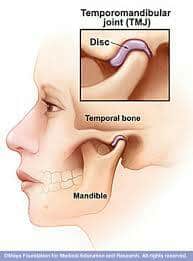
Arthritis is one cause of (TMJ) symptoms result from an injury or from grinding the teeth at night. Another common cause involves displacement or dislocation of the disk that is located between the jawbone and the socket. A displaced disk may produce clicking or popping sounds, limit jaw movement and cause pain when opening and closing the mouth.
Treatment of Temporomandibular Joint
TMJ treatment may range from conservative dental and medical care to complex surgery. Depending on the diagnosis and treatment may include short-term non-steroidal anti-inflammatory drugs for pain and muscle relaxation, bite plate or splint therapy, and even stress management counselling.
Generally, if non-surgical treatment is unsuccessful or if there is clear joint damage, surgery may be indicated. Surgery can involve either arthroscopy (the method identical to the orthopedic procedures used to inspect and treat larger joints such as the knee) or repair of damaged tissue by a direct surgical approach.
If you have any of the symptoms of, Temporomandibular joint make an appointment with your doctor or dentist to see if our treatment options can alleviate your discomfort or pain.
Related